
Hartley County Criminal Court Cases
Three local court levels divide criminal work in Hartley County. The 69th Judicial District Court hears felonies and serves Hartley, Dallam, Moore, and Sherman Counties. The constitutional Hartley County Court handles the criminal jurisdiction given to it by Texas law, including Class A and Class B misdemeanors when authorized. Hartley County has no county court at law. The countywide Justice of the Peace handles fine-only offenses, citations, magistrate work, and related warrants. A search must therefore start with the level of the charge, not merely the name of the person.
The combined County and District Clerk keeps both district and constitutional county court files. That unusual arrangement places two court levels at one clerk office, while the Hartley County Justice Court maintains its own files in Dalhart. The filed case is distinct from the sheriff's arrest report and the shared jail's booking entry. It can show whether prosecutors changed a booking charge, declined a count, or obtained a judgment.
The Hartley County district clerk page shows the combined clerk contact and online case-search notice.
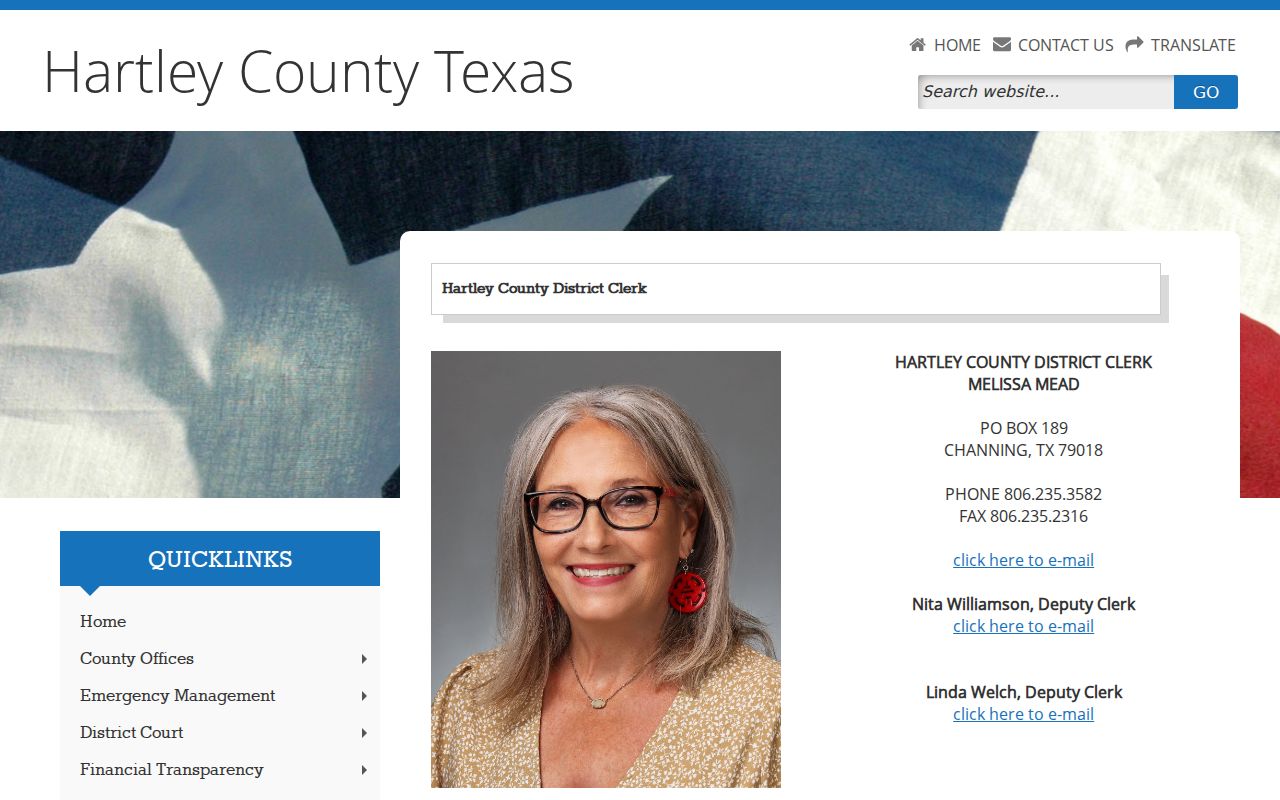
That official page is the right starting point for felony docket questions, images, archived files, and certified copies.
Hartley County Case Jurisdiction
Court level changes both the search path and the likely record. A felony accusation belongs in the 69th District Court after filing or indictment. A Class A or B misdemeanor generally points to the constitutional County Court. Fine-only matters can remain with the countywide Justice Court. Appeals from the region proceed to the Seventh Court of Appeals under appellate rules. The court name on a docket is therefore a core fact, not a minor label.
| Court | Hartley criminal role | Record contact |
|---|---|---|
| 69th Judicial District Court | Felonies and district jurisdiction | Combined clerk, 806-235-3582 |
| Hartley County Court | Constitutional county criminal jurisdiction | Combined clerk, 806-235-3582 |
| Hartley County Justice Court | Fine-only cases, citations, and related warrants | 806-244-2939 |
Charge level can change as a case develops, so confirm the filed instrument and court instead of assigning jurisdiction from an arrest description alone.
Searching Hartley County Case Records
Hartley County directs district and county case searches to iDocket. Cause number is the strongest key. When it is unknown, combine a party name with a filing range, court, or case type. The vendor does not publish a stable Hartley field manual, and access to images may depend on the interface, account, role, clerk, and whether a file was scanned. Use the clerk as the authority when an electronic result is incomplete.
- Open iDocket from the Hartley County clerk page and select Texas, Hartley County, and the correct court when those choices appear.
- Enter the cause number when known. Otherwise search the party's legal surname and first name.
- Narrow broad results by filing year, date range, court, case type, or status where the live interface offers those fields.
- Open the docket and read every charge, filing, hearing, order, judgment, and disposition separately.
- Call the combined clerk for missing images, archived files, current copy costs, or certified records.
| Field label | Type | Required | Use |
|---|---|---|---|
| County or court | Selector | As shown | Choose Hartley and the right court level. |
| Case number | Text | No published rule | Best match when the full cause number is known. |
| Party last or business name | Text | No published rule | Use the legal surname and verify identity. |
| First name | Text | No published rule | Narrows common surnames. |
| Date or filing range | Date | Optional where offered | Separates cases across years. |
| Case type or status | Selector | Optional where offered | Focuses the result list. |
The iDocket interface used for Hartley cases presents the vendor search environment.

Use it as an index to Hartley court activity, then ask the clerk for the authoritative document when accuracy or certification matters.
Missing Hartley County Case Files
An empty online result does not prove that no Hartley County criminal court case exists. An old matter may not be scanned. A new filing may not yet appear. A name may have been entered with a different form, and a justice-court matter may sit outside the district or county search. re:SearchTX is also a supplement whose coverage and image access vary by court and user role. It should not be treated as a verdict on a missing local file.
Call the combined clerk at 806-235-3582 with a cause number, full legal name, approximate filing year, and expected court. For a fine-only citation or justice warrant, call the JP at 806-244-2939. The clerk's mailing address is P.O. Box 189, Channing, Texas 79018. The official site does not publish a Hartley criminal copy fee, so confirm cost and certification needs before ordering.
The Hartley County clerk page identifies the county-case search and counter route.
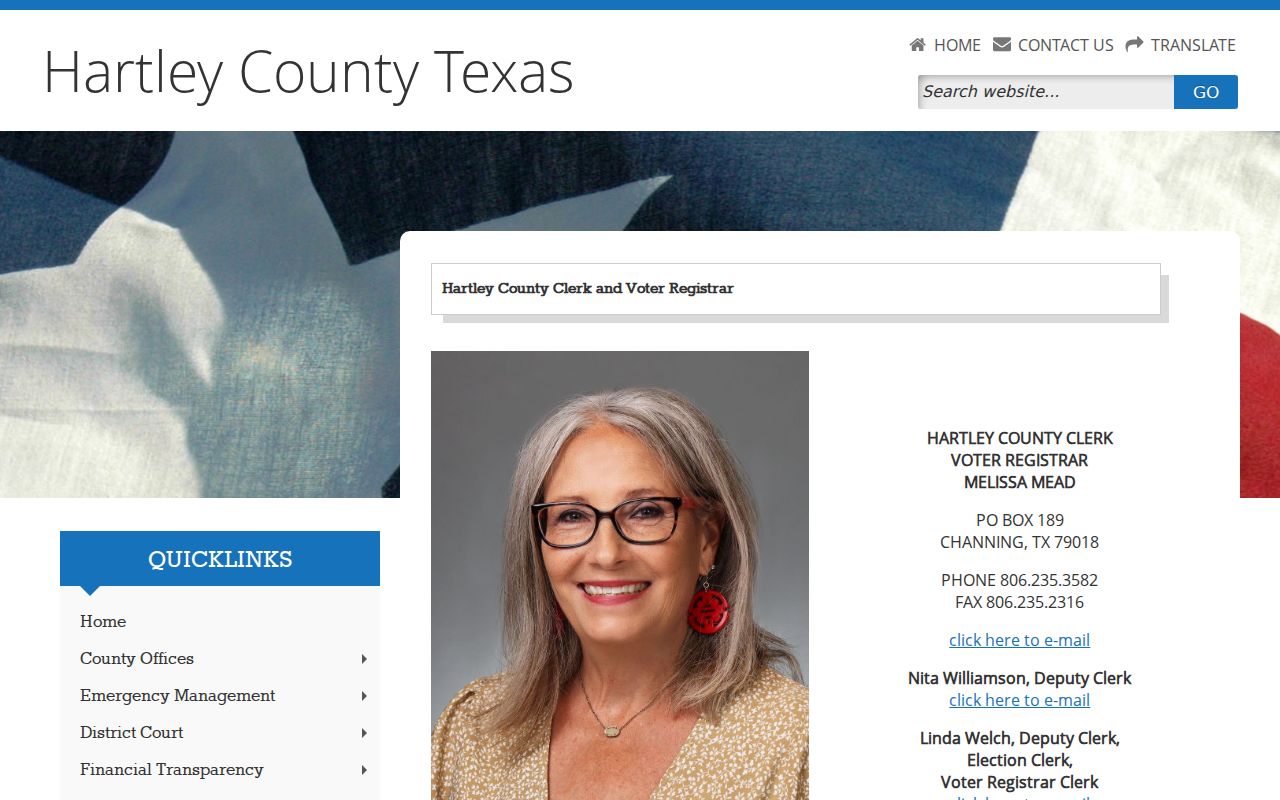
The shared clerk structure makes that same office a practical fallback for county and district case questions.
Note: Ask whether the requested image is public, archived, certified, or subject to redaction before paying for a copy.
Inside a Hartley County Case File
A Hartley County case file centers on the prosecution after a charge is filed. The header identifies the cause number, court, case type, filing date, and status. Party information identifies the State of Texas, the defendant display, and public attorney entries. The charging document may be a complaint, information, or indictment. Docket entries then show settings, arraignment, motions, pleas, orders, judgment, sentencing, and warrant or bond events. Financial entries can include fines, costs, restitution, and payments when public.
| Case number and court | Identifies the cause and the court with jurisdiction. |
|---|---|
| Charging document | Shows the filed accusation, statute, offense level, and charge date where public. |
| Docket entries | Lists filings, settings, motions, pleas, orders, capias events, and other case activity. |
| Hearing dates | Shows the date, type, and court setting when published. |
| Disposition and judgment | Records the outcome of each charge and the court's judgment. |
| Sentence and conditions | States punishment, costs, restitution, or community-supervision terms when public. |
Document images vary by subscription, role, clerk action, redaction, and scanning status. A docket line summarizes an event; the filed order or judgment supplies its full terms.
Reading Hartley County Case Dispositions
Read each count on its own. A dismissal on one count can sit beside a conviction on another. “Disposition” means the outcome of a charge. An acquittal is a not-guilty result after adjudication. A dismissal ends that charge without a conviction. Deferred adjudication places a person on community supervision without an immediate finding of guilt, subject to successful completion and the court's terms. A plea is the formal response to a charge, not by itself the whole judgment.
- Indictment
- A grand jury's written felony accusation after a true bill.
- Information
- A prosecutor-filed charging instrument often used for misdemeanors.
- Capias
- A court writ directing that a person be taken into custody.
- Nolle prosequi
- The prosecutor's formal decision not to continue a charge.
- Sentence
- The punishment or conditions imposed after a conviction.
Match the charge line, judgment, and sentence. Do not infer the outcome from a status label or a single docket entry.
How a Criminal Case Moves
A Hartley County court case begins when a complaint, information, or indictment is filed in the court with jurisdiction. The accused person is arraigned and enters a plea. Pretrial work may include motions, discovery disputes, bond matters, and settings. The case then reaches a negotiated plea, trial, dismissal, or other disposition. A conviction is followed by judgment and sentencing. Felony charging decisions and grand-jury work involve the 69th Judicial District Attorney, while county prosecution follows the county office's statutory role.
Case flow: Charges Filed › Arraignment › Pretrial › Plea or Trial › Disposition › Sentencing
This sequence is not a time promise. Settings can change, counts can be amended, and separate charges in one cause can finish in different ways.
Hartley County Case Warrants
Hartley County's Justice Court page links a dated active-warrant list for its channel. The copy inspected was dated May 20, 2026. It is a posted list, not a live statewide search, so a name's presence or absence must be confirmed with the issuing court. Justice and citation warrants route to the JP. A felony or county-case capias may appear as an event in the court docket and should be confirmed with the combined clerk.
The Hartley County Justice Court page provides the warrant-list link, office details, and citation channel.
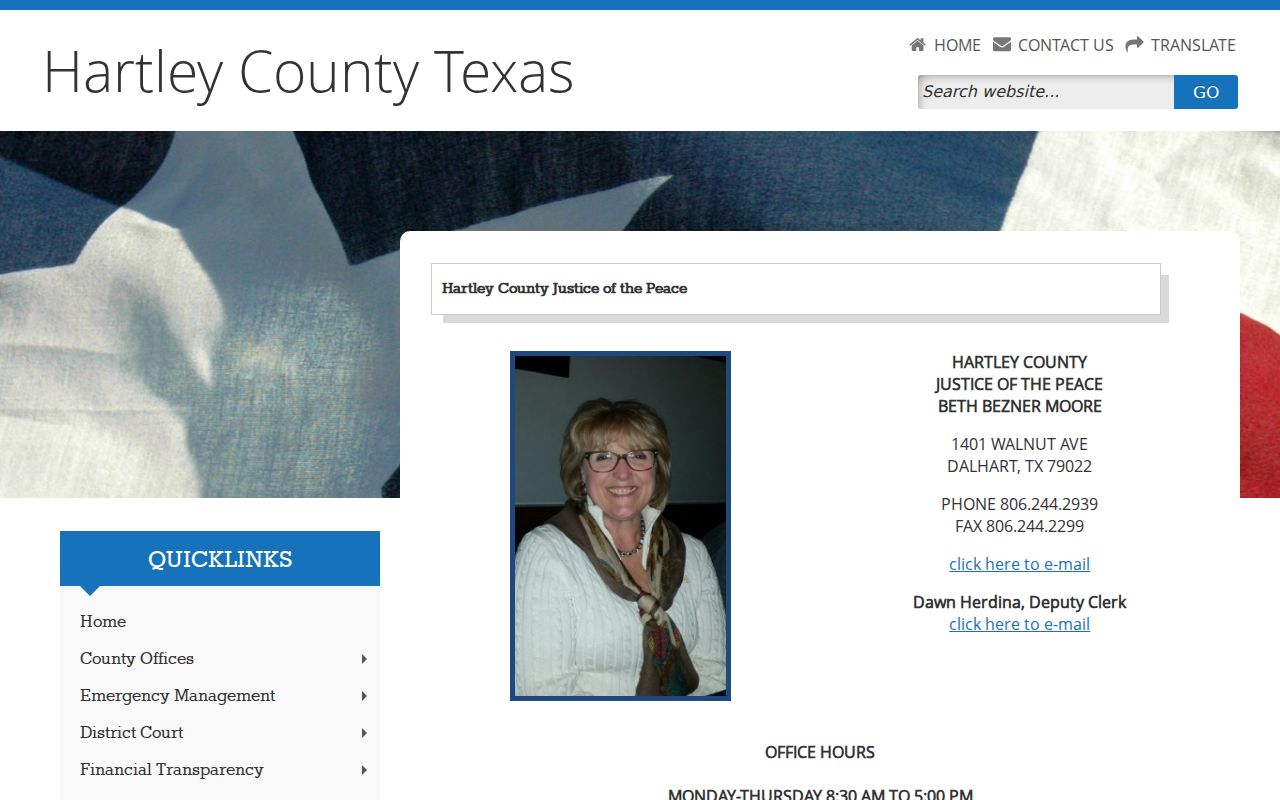
Verify a possible warrant by cause number and current court status; only the court or authorized agency can confirm recall.
Federal Cases From Hartley County
Hartley County lies in the Amarillo Division of the U.S. District Court for the Northern District of Texas. Federal criminal dockets are separate from Hartley County criminal court cases. They are searched through PACER after registration. Sealed documents and some older material will not be available online. A Texas arrest does not become a federal case just because fingerprints reach DPS or the FBI; federal prosecution must produce its own federal docket.
The official PACER site explains registration and federal case access.
PACER is the docket route when the matter was filed in federal court, not a substitute for Hartley's local iDocket index.
The Northern District of Texas website identifies the federal court that covers Hartley County.
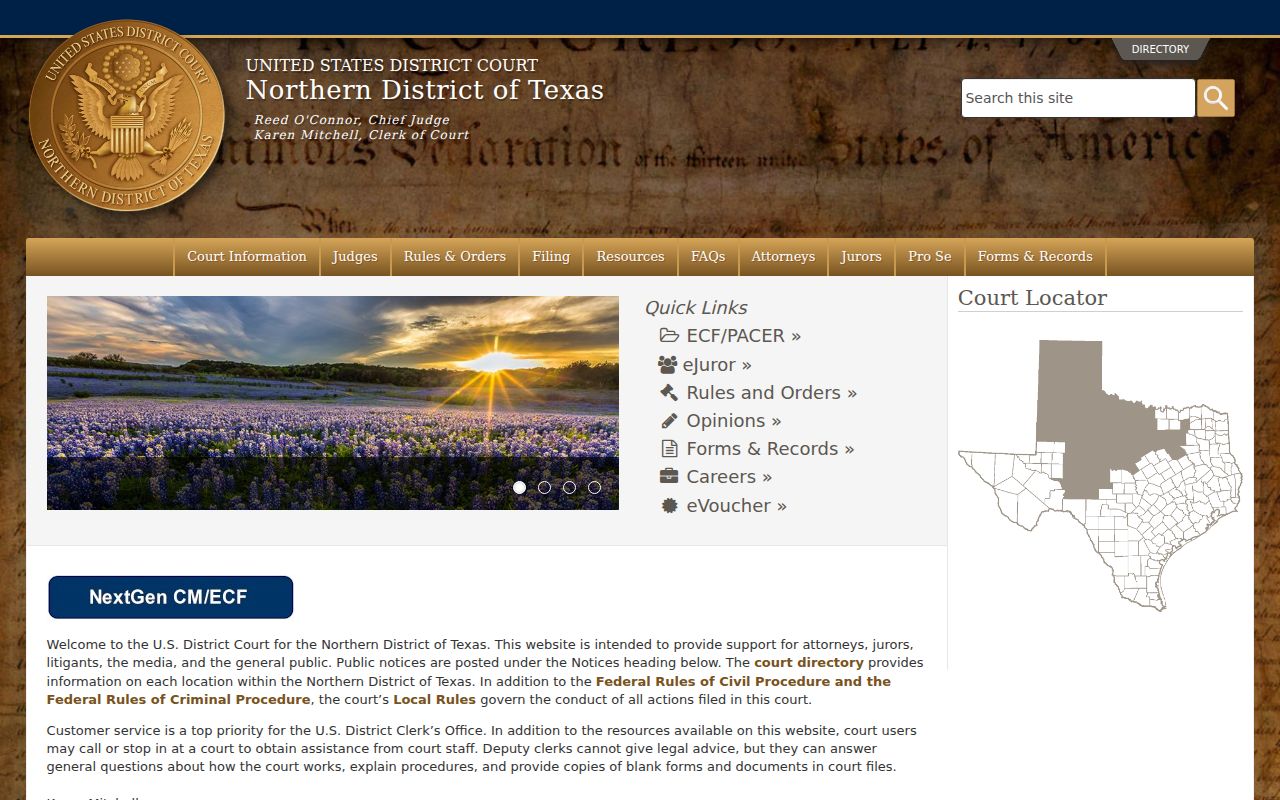
Use the federal court site for division rules and official notices, then use PACER for public docket access.
Hartley County Cases in re:SearchTX
re:SearchTX is the statewide electronic court-record platform, but court participation, document access, and user rights vary. It can help locate a Hartley County filing or provide a second search route. It cannot establish that a missing local result means no case exists. The combined clerk remains the source for the court file, certification, and questions about records that are not online.
Likewise, the DPS Crime Records Service public name search is not a court docket. Its public product is limited to convictions, deferred adjudications, and associated data that Texas law permits DPS to release. It can return reportable events from elsewhere in Texas, while a Hartley case file can contain motions and orders absent from the DPS summary. For a broader explanation of how these sources differ, use the county's criminal history overview.
Case Record Access & Restrictions
Texas court records are generally accessible, but access is not absolute. Public views omit full Social Security numbers, financial account data, protected victim or minor information, and other confidential identifiers. Juvenile files, sealed matters, expunged records, and some active or protected filings may not appear as ordinary public cases. Online access can also be narrower than access to a record that remains available from the clerk in redacted form.
The Texas Public Information Act governs access to government records, while court access also follows judiciary rules and sealing orders. Request the specific filing from its custodian and allow lawful redactions. If the clerk cannot release it, ask whether the reason is sealing, confidentiality, missing digitization, or a system-role limit. Those causes call for different next steps.